

Date:
Location:
Speaker:
Abstract: Modern polymer synthesis enables the precise incorporation of chemically associative groups into a wide range of polymer chemistries. Associative interactions mediated by hydrogen bonds, pi-pi bonds, metal-ligand coordination, and covalent-adpative chemistries can form supramolecular structures that dramatically alter the thermomechanics, viscoelasticity, and adhesive properties of polymer materials. However, efficiently designing and processing associative chemistries is difficult because the molecular mechanisms governing their stress transmission and relaxation are not well understood. Understanding this physics requires models that can resolve both the atomic-scale effects of associative chemistry and the large-scale dynamics of supramolecular self-assembly. Here I share our work developing coarse-grained molecular dynamics models that bridge these scales and apply them to study how precisely coordinated associative bonds alter the nonlinear rheology and mechanics of associative polymer melts and thermoplastic elastomers. By varying the strength and location of associative bonds on chain backbones, our simple models reproduce rate-dependent trends in viscous dissipation, elasticity, and toughness observed in experimental systems, and enable us to relate trends in properties to specific molecular scale mechanisms. By establishing these mechanistic relationships, our simulations can guide the molecular engineering of associative polymers with improved processability, self-healing, and mechanical performance.
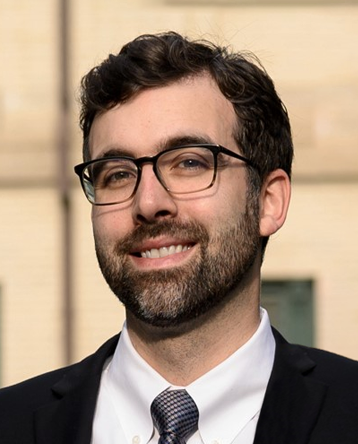
Bio: Thomas O’Connor's research group develops molecular models of the processes governing the processing and mechanical performance of soft materials. His group develops new molecular simulation methods to enable mechanistic interpretation of macroscopic mechanical and rheological measurements. He is a recipient of the 2024 DOE Early Career Research Program Award which supports his group’s research on the fracture mechanics and self-healing of chemically associative thermoplastic elastomers. O’Connor is an active developer of the open source LAMMPS software for molecular modeling. Prior to joining Carnegie Mellon, O'Connor was a Harry S. Truman Fellow at Sandia National Laboratories, where he maintains close ties as a developer of the open-source LAMMPS simulation software. He is an executive officer of the U.S. Society of Rheology and an active member of the Division of Polymer Physics of the American Physical Society.